Plan your visit to St. Mary’s Basilica Krakow
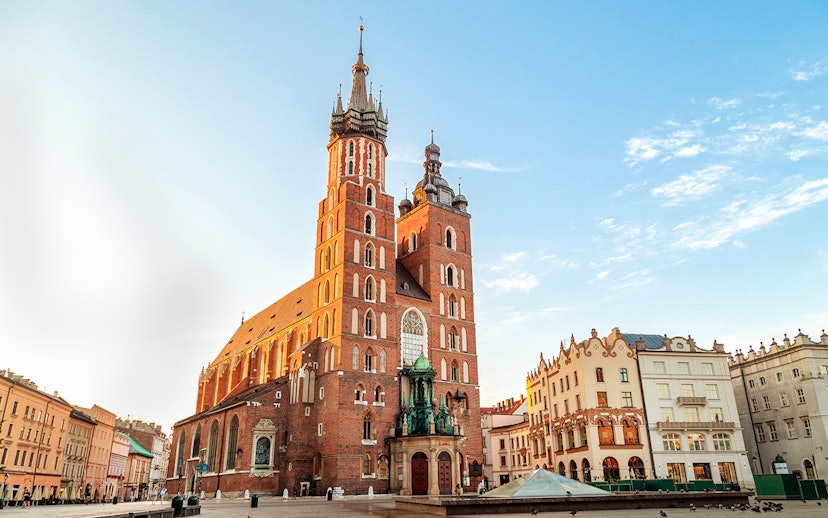
St. Mary’s Basilica is Krakow’s Gothic landmark on Main Market Square, best known for its towering wooden altarpiece and the hourly bugle call from its taller tower. The visit itself is short, but it feels much richer if you know the difference between the prayer entrance and the tourist entrance, and if you time your visit around the 11:50am altar opening or the quieter late-afternoon window. This guide covers timing, entrances, tickets, and what’s genuinely worth slowing down for.
Quick overview: St. Mary’s Basilica at a glance
If you want the short version before planning the rest of your day, start here.
- When to visit: When to visit: Monday–Saturday, 11:30 am–6 pm, and Sunday, 2 pm–6 pm. After 4 pm, it is noticeably calmer than between 11:30 am and 1 pm, as the altar opening and 12 noon bugle call draw in both tour groups and walk-up visitors at the same time.
- Getting in: Standard entry starts from zł30. Tower entry from zł20, and guided tours usually start around zł30. General church admission is usually easy to buy on the day, but tower slots and guided tours need more planning on summer weekends.
- How long to allow: 30–45 min works for most visitors. It stretches closer to 1–1.5 hours if you want the 11:50am altar opening or the Bugle Tower climb.
- What most people miss: The side chapels, the stained glass above the organ loft, and the ceiling itself, many visitors stop at the altar, take photos, and leave too quickly.
- Is a guide worth it? Yes if you want the altarpiece, the trumpet tradition, and the tower legends explained properly; no if you mainly want a short, self-paced look at the interior.
🎟️ Tower slots for St. Mary’s Basilica usually sell out by 12 noon in summer. Lock in your visit before the time you want is gone.
Jump to what you need
🕒 Where and when to go
🎟️ Which ticket is right for you?
🗺️ Getting around
⛪ What to see
♿ Facilities and accessibility
Where and when to go
How do you get to St. Mary’s Basilica?
St. Mary’s Basilica sits on the north-east corner of Main Market Square in Krakow’s Old Town, about 5–7 min from Poczta Glowna and around 10–12 min from Krakow Glowny.
- Tram: Poczta Glowna → 5–7 min walk → easiest public transit stop if you’re not already staying in the Old Town.
- Train: Krakow Glowny → 10–12 min walk → follow Florianska Street straight into Main Market Square.
- Taxi/rideshare: Drop-off at Plac św. Ducha or near Florianska Gate → 3–5 min walk → cars do not enter the square itself.
Which entrance should you use?
The biggest mistake here is joining the wrong line. The main front doors are for prayer and Mass access, while tourist entry and tower entry work separately.
- Tourist entrance: Located on the south side at Plac Mariacki. Best for paid sightseeing entry. Expect 5–20 min wait time around 11:30am–1pm in summer.
- Main doors: Located on the square-facing front facade. Best for Mass and quiet prayer only. Expect little or no wait outside service changes.
- Tower entrance: Located at the base of the taller tower on the Florianska Street side. Best for Bugle Tower ticket holders. Expect same-day slots to be gone by 12 noon in summer.
When is St. Mary’s Basilica open?
- Monday–Saturday: 11:30am–6pm
- Sunday and holy days: 2pm–6pm
- Last entry: 5:45pm
When is it busiest? 11:30am–1pm from May–August is the tightest window, because visitors stack around the 11:50am altarpiece opening and stay for the 12 noon bugle call.
When should you actually go? After 4pm is usually the easiest time to visit, because the tour groups have mostly moved on and you’ll have far more room in the nave and chapels.
Which St. Mary’s Basilica ticket is best for you
| Ticket type | What's included | Best for | Price range |
|---|---|---|---|
Basilica admission | Church entry to the tourist section + Veit Stoss Altarpiece + side chapels | A short, self-paced visit where you want the interior highlights without adding a guide or tower climb. | From zł30 |
Bugle Tower ticket | Timed tower entry + 239-step climb + Old Town views | Seeing the bugler tradition up close matters to you more than a longer interior visit, and you’re comfortable with narrow stairs. | From zł20 |
Guided basilica tour | Church entry + licensed guide + historical context | A first visit where you want the altarpiece, iconography, and local legends explained clearly instead of piecing them together yourself. | From about zł30 |
Old Town walking tour with basilica entry | Old Town walk + basilica entry + guide | You want St. Mary’s as part of a broader Krakow route rather than as a standalone stop. | From about zł30 |
Krakow Card/city pass | St. Mary’s entry + multiple museums and landmarks + selected transit benefits | You’re planning several Krakow attractions in 2–3 days and want the basilica folded into a wider sightseeing pass. | From about zł35 |
How do you get around St. Mary’s Basilica?
Inside the basilica
St. Mary’s Basilica is best explored on foot and can be covered properly in about 30–45 min. The main focal point, the Veit Stoss Altarpiece, sits at the far eastern end, so most visitors move straight toward it and miss what’s behind and beside them.
- Main nave: The central space with the starry ceiling and full altar view → budget 10–15 min.
- High altar area: The best place to study the Veit Stoss carvings once the crowd thins → budget 10 min.
- Side chapels: A ring of smaller devotional spaces with sculptures, paintings, and memorials → budget 10–15 min.
- West end/organ loft: Best for stained glass and the broader color palette of the interior → budget 5 min.
Suggested route: Start in the center aisle for the altar, then move clockwise through the chapels before finishing near the back under the organ loft. This order works because the crowd bunches in front of the altar first, while the side spaces stay quieter.
Maps and navigation tools
- Map: No formal visitor map is usually necessary → the church is one main nave with side chapels → a simple floor plan in a guidebook is enough if you want chapel names in order.
- Signage: Wayfinding is basic but workable → you can self-navigate the main route easily → chapels are where downloaded notes or a guide help most.
- Audio guide/app: There is no standard on-site audioguide → most visitors use plaques, printed notes, or a guided tour → a live guide adds more value here than an app does.
💡 Pro tip: Don’t stop only at the altar rail, the visit feels much richer if you do one full clockwise lap of the chapels before leaving, because that’s where the crowd usually thins out first.
What are the most significant spaces in St. Mary’s Basilica?

Veit Stoss Altarpiece
Sculptor: Veit Stoss, 1477–1489
This is the main reason most people visit, and it quickly draws their attention. The large carved wooden altarpiece dominates the east end of the church, with life-size figures and detailed gold work that are best seen up close rather than in a quick photo. Most visitors focus only on the central scene, but the outer wings and smaller narrative panels are where the craftsmanship really stands out.
Where to find it: At the high altar at the far eastern end of the nave
The starry nave ceiling
Restoration era: 19th-century polychrome scheme led by Jan Matejko
The ceiling is one of the basilica’s biggest surprises because visitors often spend the whole visit looking forward instead of up. Its deep blue background and gold stars make the church feel almost theatrical, especially once your eyes adjust to the darker interior. What many people miss is how the murals, columns, and ceiling were designed to work as one continuous color field rather than as separate decorative pieces.
Where to find it: Best seen from the middle of the nave or from a pew near the center aisle
The stained glass by the organ loft
Artists: Stanisław Wyspiański and Józef Mehoffer, around 1900
These windows add a quieter kind of drama than the high altar. In late afternoon, the light from the western side catches the glass and shifts the whole rear part of the church into warmer color, which changes the feel of the space completely. Many visitors leave before turning around to study this end of the basilica, so they miss one of its most atmospheric views.
Where to find it: At the western end of the church, above and around the organ loft
The Passion Chapel and Pietà
Type: Devotional chapel with sacred sculpture
This smaller chapel is where the pace of the visit usually slows down. The Pietà gives you a more intimate encounter than the main altar does, and it shows how much of the basilica’s power lies outside its headline masterpiece. Most people rush past while circling the perimeter, but this is one of the best places to feel the church as a place of prayer, not just sightseeing.
Where to find it: Along the side chapel circuit off the main nave
The chapel circuit itself
Era mix: Gothic, Renaissance, and Baroque additions
The side chapels are easy to underestimate because they don’t announce themselves from the center aisle. Yet they hold memorials, altars, devotional images, and traces of the city’s guild and noble history that make the church feel layered rather than one-note. The detail most visitors miss is that each chapel reflects a different period of Krakow’s religious and artistic life, so the circuit works like a condensed history lesson.
Where to find it: In a ring around the nave; follow the perimeter clockwise after viewing the high altar
Facilities and accessibility
- 🎟️ Ticket office: Same-day tourist entry is handled from the side ticket office at Plac Mariacki, not from the main square-facing doors.
- 📸 Photography permits: Photo permission may require a small extra fee at the ticket desk, so ask when buying your entry ticket rather than finding out inside.
- 🪑 Seating/rest areas: Pews throughout the nave make it easy to sit for a few minutes and look up at the ceiling without standing in the flow of traffic.
- 🛍️ Gift shop/merchandise: A small kiosk near the exit usually sells postcards and religious souvenirs, which is useful if you want a quick memento without adding another stop.
- 🙏 Prayer area: The front section by the main entrance is reserved for prayer and worship, so it functions differently from the paid sightseeing route.
- 🚪 Tower ticket point: Bugle Tower tickets are handled separately from the church entry and are sold in person on the day.
- ♿ Mobility: Access is partial rather than full, staff can open a side door to avoid steps, and the main floor is mostly level, but some chapel areas are tighter and the tower is stair-only.
- 🧠 Cognitive and sensory needs: Late afternoon is the easiest low-stress window, while 11:30am–1pm is the loudest and most crowded because of tour groups, the altar opening, and the bugle-call rush.
- 👨👩👧 Families and strollers: A stroller is possible on the main floor, but the side entrance steps, narrow pockets around chapels, and midday crowding make it less smooth than the open square outside.
- 🚶 Tower access: The Bugle Tower is not accessible for visitors with mobility limitations because it requires climbing 239 steep wooden steps.
- 🚻 Restroom planning: There are no visitor restrooms inside, so it is best to plan ahead and use facilities before entering.
St. Mary’s Basilica works well with children if you treat it as a short, visual stop rather than a long church visit. The hourly bugle call, starry ceiling, and dramatic altar reveal give them something concrete to watch for.
- 🕐 Time: 20–30 min is realistic with younger children, and the best priorities are the altar, one bugle call, and a quick ceiling look.
- 🏠 Facilities: Seating in the pews helps if children need a pause, but there’s no restroom or café inside to break up the visit.
- 💡 Engagement: Tell children the story of the bugler before you go in, then have them listen for the next hourly trumpet call so the visit has a clear mission.
- 🎒 Logistics: Bring only a small bag, try to avoid the midday rush if possible, and skip the tower unless everyone in your group is comfortable with steep stairs.
- 📍 After your visit: Rynek Underground Museum is an easy follow-up on the same square and usually holds children’s attention better than another church stop.
Rules and restrictions
What you need to know before you go
- Entry requirement: Tourist sightseeing requires a paid ticket bought on-site, while the main front doors are for Mass and prayer access.
- Bag policy: Large backpacks and luggage are not a good idea here because there’s no cloakroom and bulky bags can be refused.
- Re-entry policy: Tourist entry is for a single visit, so if you leave for a restroom or coffee break, you should expect to buy another ticket.
Not allowed
- 🚫 Food and drink: Eating and drinking are not part of the visitor route, so finish snacks and coffee before entering.
- 🚬 Smoking and vaping: Smoking and vaping are not permitted inside the church.
- 🐾 Pets: Pets are not allowed inside, though service animals should be treated differently from regular pets.
- 🖐️ Touching exhibits: Touching altars, sculptures, or chapel furnishings is not allowed, because this is an active church with fragile historic artwork.
Photography
- Allowed: Photography is generally possible for tourists, but a small photo permit fee may apply.
- Where rules change: During Mass, prayer times, or in clearly restricted sacred areas, sightseeing-style photography is not appropriate.
- Flash, tripods, selfie sticks: Flash should be avoided, and bulky gear like tripods or selfie sticks is not a good fit for the narrow, quiet interior.
Dress code
St. Mary’s Basilica enforces a dress code for church entry, especially during worship and busy periods. Entry can be refused if staff feel the clothing is too revealing for a sacred space.
Required:
- Shoulders covered
- Knees covered
- Respectful clothing suitable for an active church
Good to know: If you arrive underdressed, the easiest fix is a light scarf or layer from your day bag rather than hoping staff will wave it through.
⚠️ Dress code is enforced at the entrance with no exceptions. Very short shorts and beachwear are the most common reasons visitors get stopped in summer, and a simple extra layer solves the problem quickly.
Good to know
- Tourist visits are paused during Masses and other liturgical services, so the church may look open from the square but not be available for sightseeing at that time.
- Free entry through the main doors gives access only to the prayer area, not the full tourist route or the best views of the altar.
Practical tips
- Booking and arrival: For the best view of the 11:50am altar opening, aim to arrive at the side ticket office by around 11:30am. For the tower, go closer to its 10am opening, as same-day slots often sell out by 12 noon in summer.
- Pacing: Don’t burn your attention on the first 5 min at the altar and leave, save 10–15 min for the chapels and the stained glass at the back, which most visitors rush past.
- Crowd management: If you don’t care about the ceremonial opening, after 4pm is usually the sweet spot here because the tour groups have thinned out and you can actually stand still in the center aisle.
- What to bring or leave behind: Bring only a small bag and keep a little cash handy for any photo permit fee; large bags slow you down and there’s nowhere to store them.
- Food and drink: Eat before you go in or wait until after, because there’s no café or restroom inside and stepping out mid-visit means ending the visit rather than pausing it.
- Tower strategy: Only add the Bugle Tower if you want the view or the tradition up close, the 239-step climb is steep enough that it changes the visit from calm church stop to active add-on.
- Photo timing: If you want interior photos without a wall of people under the altar, late afternoon works far better than the 11:50am ceremony window.
What else is worth visiting nearby?
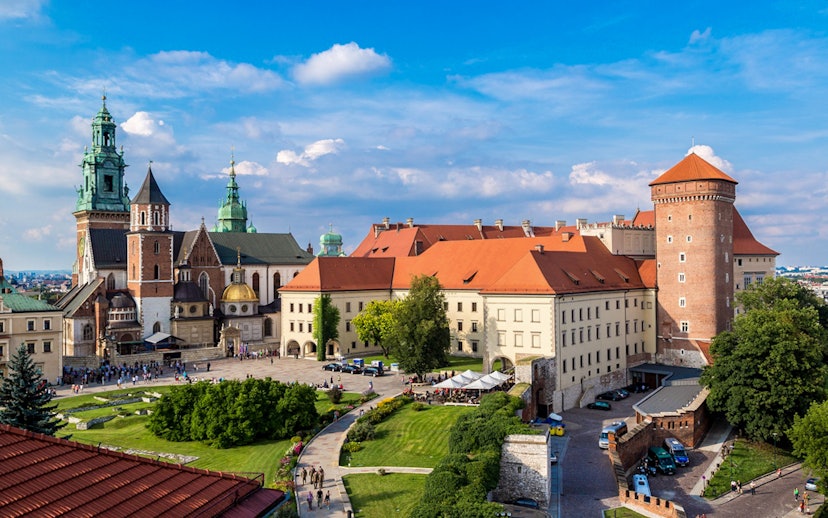
Commonly paired: Wawel Castle and Cathedral
Distance: 1.2km - 15 min walk
Why people combine them: They make a natural same-day Krakow route, with St. Mary’s covering the square and Wawel adding royal history, tombs, and river views.
Commonly paired: Rynek Underground Museum
Distance: 150m - 2 min walk
Why people combine them: It sits under the same square, so you can move from the basilica’s sacred history straight into medieval market archaeology without losing time in transit.
Also nearby
Town Hall Tower
Distance: 250m - 3 min walk
Worth knowing: It’s the easiest alternative viewpoint if the Bugle Tower is sold out or you want square views without a timed church ticket.
Cloth Hall Gallery
Distance: 120m - 1–2 min walk
Worth knowing: It’s a smart follow-up if the church interior made you curious about Polish art, especially as Jan Matejko is an important figure in both places.
Eat, shop and stay near St. Mary’s Basilica
- On-site: There’s no café inside the basilica, so this is a visit to plan around rather than through.
- Szara Ges w Kuchni (1-min walk, Rynek Główny 17): Polish and European dishes, mid-to-high price point, and one of the better square-view options if you want a real sit-down meal after visiting.
- Cafe Camelot (5-min walk, ul. sw. Tomasza 17): Cafe fare and cakes, mid-range, and a much calmer choice than the busiest square terraces.
- Milkbar Tomasza (4-min walk, ul. Św. Tomasza 24): Polish comfort food, low price point, and one of the best quick-value lunches near the square.
- 💡 Pro tip: Eat before 11:30am or after 1pm if you’re visiting around the altar opening. The square gets hit by both church traffic and lunch crowds at the same time.
- Sukiennice market stalls: Amber jewelry, wooden crafts, and classic Krakow souvenirs right in the middle of Main Market Square, which makes it the easiest post-visit shopping stop.
- St. Mary’s souvenir kiosk: Postcards and small religious keepsakes near the exit, which is useful if you want something simple without turning the visit into a shopping detour.
Staying around Main Market Square is undeniably convenient for a St. Mary’s visit. You can walk to the basilica in minutes, hear the bugle call from your hotel room area, and reach most Old Town highlights on foot. The trade-off is price and noise, this is one of the busiest parts of Krakow, especially in summer and around the Christmas market.
- Price point: The area skews mid-range to expensive, especially for rooms with square access or prime Old Town addresses.
- Best for: Short trips where you want minimal logistics and easy early-morning or late-evening walks through the center.
- Consider instead: Kazimierz works better for longer stays, food-focused trips, and evenings with more local character, while Stradom gives you a quieter base between Old Town and Kazimierz.
Frequently asked questions about visiting St. Mary’s Basilica
Most visits take 30–45 min. If you add the 11:50am altar opening, wait for one hourly bugle call, or climb the Bugle Tower, it can stretch closer to 1–1.5 hours without feeling rushed.
No, general church entry is usually bought on-site the same day. The exception is summer weekends and the tower climb, where arriving early matters more than advance planning because tower tickets are limited and often gone by 12 noon.
You usually don’t need to, because general church entry is not timed. If you want the 11:50am altar opening, arrive about 20–30 min early, and if you want the tower, go close to the 10am opening because those timed slots are limited.
Yes, but keep it small. Large backpacks and luggage are impractical here because there’s no cloakroom, the church gets crowded in the center aisle, and staff may stop bulky bags from entering.
Yes, but photography rules are more nuanced than a simple yes or no. A small photo permit fee may apply, flash is a bad idea, and photography during Mass or around active prayer areas is not appropriate even if sightseeing is allowed at other times.
Yes, group visits are common. The main thing to know is that the church remains an active place of worship, so large groups need to stay quiet and guides usually keep commentary controlled rather than speaking freely across the nave.
Yes, if you treat it as a short stop. The bugle-call story, the starry ceiling, and the dramatic altar make it easier for children than many church visits, but the tower climb is not suitable for children under 8 and midday crowds can test patience.
It is partially accessible, not fully. Staff can help with a side entrance to avoid steps and the main floor is mostly manageable, but the tower is completely inaccessible and some chapel spaces are tighter than the central nave.
Food is available nearby, but not inside the church. Main Market Square is lined with cafés and restaurants within 1–5 min, so it’s better to plan coffee or lunch before or after the visit rather than in the middle.
Yes, modest dress is expected. You should cover shoulders and knees, especially in summer, because this is an active church and staff can stop visitors whose clothing feels too revealing for the setting.
You can climb the Bugle Tower, but not freely and not year-round. The tower is usually open from spring to fall, tickets are sold on the day, entry is timed in small groups, and the climb involves 239 steep wooden steps.